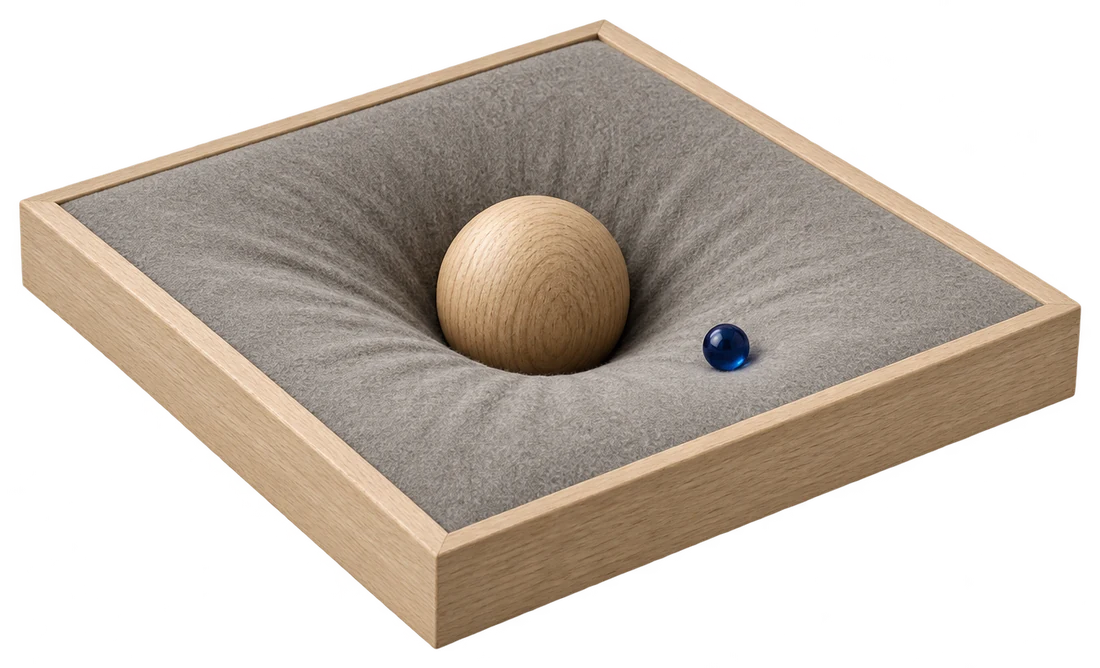
Physics has no accepted way to combine gravity with quantum theory, the rules of the very small. Usual attempts treat gravity as a tiny ripple on a fixed backdrop, and the math then spits out infinite answers. In a new preprint, a Stanford physicist builds the theory differently: on null cones, the surfaces traced out by light spreading from a point, without assuming a fixed backdrop. He reports that a basic process, a pair of gravitons (the hypothetical particles of gravity) appearing and vanishing, gives a finite answer. He also says the theory reproduces the known entropy of black holes, a measure of their hidden information, plus a known small correction to it.
The author argues this could be a complete quantum theory of gravity, but it covers only gravity without matter and makes no testable prediction yet. The paper has not been peer reviewed. The author credits months of exchanges with an OpenAI model in its acknowledgments.